
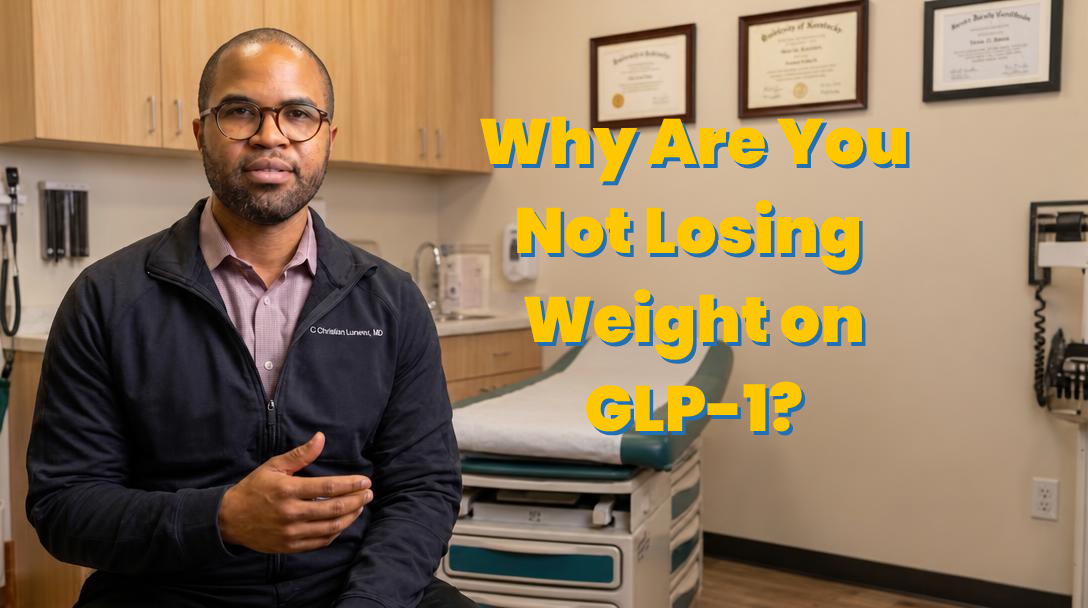
Not losing weight on GLP-1 medication, or losing weight at first and then hitting a plateau, can be frustrating. Medications such as Wegovy, Ozempic, Zepbound, and Mounjaro can support weight loss, but they don’t produce the same results for everyone. Your dose, nutrition, activity level, metabolism, other medical conditions, and even how long you’ve been taking the medication can all affect your progress.
I’m Dr. Christian Bramwell, a board-certified family medicine and sports medicine physician. In this article, I’ll explain some of the most common reasons you may not be losing weight on a GLP-1 and what you can discuss with your healthcare provider to help get your progress moving again.
I love GLP medications as part of a regimen of exercise and nutrition to help patients get in shape. The data on them is great in terms of reducing cardiovascular events like heart attack and stroke and slowing down kidney disease, amongst other things.
While GLP medications are very useful, they are not magic pills. They can make it easier to lose weight, but they may not lead to continued weight loss for some people.
How GLP-1 Medications Work
These medicines work by mimicking natural incretin hormones that the gut releases after meals to digest food. This is a hormone, just as testosterone and estrogen are hormones.
When you take a glucagon- like peptide (GLP-1) drug, such as Ozempic, it tells the pancreas to secrete insulin only when blood sugar rises, blocks the liver from pumping excess sugar into the blood, and physically slows stomach emptying so nutrients are absorbed gradually.
At the same time, it targets appetite and satiety centers in the brain, which dulls hunger, quiets persistent food cravings, and makes you feel full much faster.
What is a GLP-1/GIP Medication?
Dual-GIP/GLP medications like tirzepatide (Mounjaro/Zepbound) combine this GLP-1 activity with glucose-dependent insulinotropic polypeptide (GIP). It is a sister hormone that further drives natural insulin release and interacts directly with receptors in fat tissue. This dual activation improves lipid metabolism, boosts overall insulin sensitivity, and amplifies the appetite-suppressing effects of GLP-1, giving better fat loss.
Overall, these medicines support behavior change but are not a magic pill for weight loss.
Top Reasons You Might Not Be Losing Weight
1. You are not on the Correct Dose
GLP-1 therapy begins at a low dose and scales up slowly to prevent gastrointestinal side effects such as nausea and abdominal pain.
Because this ramp-up can take several months, significant weight loss and appetite suppression often don’t occur right away. If progress feels stalled, your healthcare provider may need to evaluate your current dosage.
Everybody is different; reaching that steady- state dose is important. It is where you have just as much drug entering your body as is being eliminated. If the dose is too low, more of the medicine is eliminated prior to taking effect; thus, weight loss will be slowed.
2. Not Eating Enough Protein, Eating too many Carbohydrates
Prior to starting patients on GLP medications. I always make it a point to emphasize diet. The best way to lose weight with the medicine is eating more protein and less processed carbohydrates. Protein is lower on the glycemic index, which causes less inflammation in the body, thus causing fewer insulin spikes, making you feel fuller for longer.
Processed carbohydrates are high on the glycemic index. They cause rapid insulin spikes and can lead to hunger and cravings.
I recommend my patients eat at least 100 grams of protein a day via meat and non-meat sources. Good meat sources include poultry, organic lean red meat, and seafood. Non-meat sources of protein include beans, tofu, ancient grains, seeds, and eggs.
Your body does need carbohydrates as an energy source. Try to eat more complex carbohydrates daily. Ones that have fiber and protein are vegetables, ancient grains, oatmeal, and seeds.
Eat simple carbohydrates in moderation, like white bread, white potatoes, white pasta, and processed sugar.
3. Not Enough Resistance Training
Most people fall into the cardio trap. Yes, cardio is important to keep your heart in good shape and to keep your blood pressure low. But for weight loss, you will get better results when you add in more resistance training.
Resistance training adds lean muscle mass to your body. The more muscle you have, the more it increases your basic metabolic rate, or the amount of calories you burn just to maintain your body or to live.
You do not get this effect with cardio, as you only burn calories while you are doing the cardio activity.
Another benefit is that when you do resistance training, you make your muscles more sensitive to insulin.
Earlier I stated that one of the functions of GLP medicines is that they make your body more sensitive to insulin. Resistance training also does the same thing.
You have a tremendous amount of muscle in your body between your chest, quadriceps, hamstrings, and back. Getting these muscles activated will force your body to break down more sugar and fat to give those muscles the proper energy they need to heal and recover.
4. Natural Metabolic Adaptations
It is frustrating to see weight loss stagnate seemingly out of nowhere.
Weight loss can plateau even though you are doing the correct things when it comes to diet and exercise.
Our body has natural adaptations to make sure that we have good energy stores so we avoid starvation. This is one of the survival mechanisms that have kept humanity alive for thousands of years.
As we lose weight, our body’s metabolism naturally wants to slow down to stop burning so much energy. Thus, we are burning fewer calories at rest in a process called metabolic adaptation.
As we lose weight, our body thinks that we may be starving, and as we get to lower weights, it will do more to hold on to the fat and energy we have.
The best way to overcome this, though, is through strength training and building more muscle to increase your metabolic demand.
4. Not Tracking Calories Properly
Just because you are eating less often does not mean you lose weight. What you are eating is just as important as the amount of times you are eating.
If you are eating calorie-dense foods like milkshakes and cheeseburgers, you are not reducing your overall caloric intake even if you’re eating fewer meals.
Please track your calories and make sure you are paying attention to portion sizes. Here in America most items we sell are more than one portion size, so moderation is key.
I also recommend downloading an app like Yuka, which helps track your calories and also tells you the quality of the food you are eating.
5. Untreated Other Medical Conditions
Other endocrine conditions, especially, can make it harder for weight loss to occur. Those diseases would include things like hypothyroidism or polycystic ovarian syndrome. These diseases make people more prone to insulin resistance and weight gain.
I recommend prior to starting therapy, people should get a lab panel looking at their metabolic markers, including liver function, kidney function, thyroid, fasting insulin, hemoglobin A1c, and cholesterol
Also, there are other medicines that, as a side effect, can cause weight gain; these are steroids, antidepressants, and antipsychotic medicines.
When you discuss your GLP with your doctor, also have a discussion about any possible interactions with your other medicines.
6. Not Having Proper Expectations
Rome was not built in a day.
It is important to emphasize that since one does not gain 100 pounds in a month, you will not lose it in a month.
A realistic and sustainable weight loss is one to two pounds a week. Anything more than that can lead to the bad side effects of GLPs that you have heard of. This can lead to muscle wasting, hair loss, and other skin issues if you’re losing weight faster than your body wants to.
While many people see steady results immediately, about 15%–20% of patients are “slow responders” who lose very little weight during the first 8–12 weeks. Studies show that many late responders still reach meaningful weight reductions (≥5%–10%) once they spend sufficient time at higher maintenance doses.
Based on major clinical trial data (such as the STEP and SURMOUNT trials), the typical progression of total body weight loss follows this timeline:
| Timeframe | Semaglutide (Wegovy) | Tirzepatide (Zepbound) | What’s Happening Clinically |
| 1 Month (Week 4) | ~2% – 4% | ~2% – 4% | Initiation phase: Low starting doses (0.25 mg semaglutide / 2.5 mg tirzepatide). Early drops are often a mix of reduced water retention, smaller portion sizes, and mild initial appetite reduction. |
| 3 Months (Week 12) | ~6% – 9% | ~7% – 10% | Titration phase: Doses step up monthly. Appetite suppression and reduction in “food noise” become much more consistent. |
| 6 Months (Week 24) | ~11% – 13% | ~13% – 16% | Peak loss rate: Patients typically reach or approach maximum therapeutic maintenance doses, producing the steepest drop on the scale. |
| 1 Year (Week 52) | ~14% – 16% | ~18% – 21% | Plateau/Maintenance: Weight loss generally begins leveling off between months 10 and 14 as the body’s metabolic rate adapts, settling into long-term maintenance. |
To Summarize
- Incorporate resistance training into your cardio. I recommend at least three days of 20 to 30-minute resistance sessions in addition to cardio. You should total 150 minutes per week of total exercise.
- Keep track of your calories, and make sure that you are reducing your simple carbohydrates and eating a good amount of protein. This will help prevent muscle and hair loss.
- Reduce stress and get enough sleep. Added stress will lead to more insulin resistance and make it harder to lose weight.
- Pay attention to your calories. Both the total amount of calories that you eat per day and the quality of those calories.
- Aim for a weight loss of one to two pounds per week for a sustainable goal.
- Do not become addicted to looking at the scale. As you lose weight, the scale may not reflect it, as muscle weighs more than fat. Instead, focus on your waist circumference or pant size. If you are staying at the same weight yet your pant size is going down, you are gaining muscle and losing fat.
- Pay attention to your lab biomarkers like insulin, A1C, and inflammation markers to track your progress.
- Consult other professionals like dietitians and nutritionists to help create personalized meal plans and lifestyle goals.
Ready To Get Started?
I hope you learned something from this. I’m Dr. Christian Bramwell, board-certified in Family Medicine and Sports Medicine.
If you are ready to get started with your weight loss journey with or without GLPs. Please contact us at North Chattahoochee Family Physicians, as I and our expert providers are eager to help you on your weight loss journey.
Please contact the clinic at 770-497-1555.