
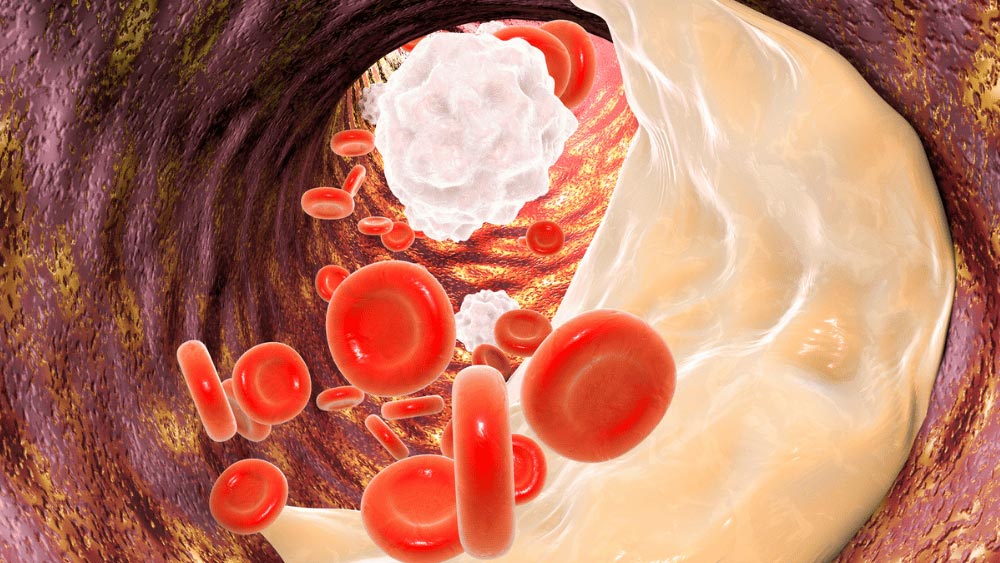
“I don’t understand why won’t my cholesterol go down doc”. If I had a nickel for every time I heard this phrase, I would be retired from medicine by now.
A lot of my patients, especially anyone 40 and older, may have issues getting their cholesterol under control.
I’m Dr. Christian Bramwell Board Certified Family Medicine and Sports Medicine. Let me explain that your high cholesterol may not be your fault. For some people, there is a genetic component that, despite a great diet and exercise, cannot be significantly reduced without medicines. This is called Familial Hypercholesterolemia (FH), and there are certain markers in your blood that show this.
I know people are afraid of starting new pills, especially the statins (which have a bad reputation that is NOT deserved) or other cholesterol medicines.
Let me explain the factors that control cholesterol levels and how we can get your cholesterol numbers under control.
How does Cholesterol move in our bodies?
Cholesterol travels through the bloodstream packaged inside lipoprotein particles, because cholesterol is a fat and cannot dissolve in blood. Our blood is mostly water-based and does not mix well with fats ( think how oil and vinegar don’t mix well together).
These particles act as delivery trucks made of a protein-and-phospholipid shell that carries cholesterol and triglycerides to and from tissues.
There are two main directions of travel: outbound (liver → body) and return (body → liver), which is the key concept for patients.
- Low Density Lipoprotein (LDL) is the ‘delivery truck’ that drops cholesterol off around your body. If there’s too much, the extra gets dumped into your artery walls—that’s how clogs (plaques) form that cause heart attacks and strokes. That is why it is the BAD cholesterol.
- High Density Lipoprotein (HDL) is the ‘cleanup/return truck’ that picks up extra cholesterol and hauls it back to the liver to be gotten rid of—so it’s the GOOD cholesterol.
What is familial hypercholesterolemia (FH)?
In FH, a gene that makes these cleanup receptors doesn’t work properly. So the LDL cholesterol is not cleared well, and it builds up in your blood starting from birth — even in children and young adults who feel completely healthy.
FH is more common than most people think — about 1 in every 250 people has it.
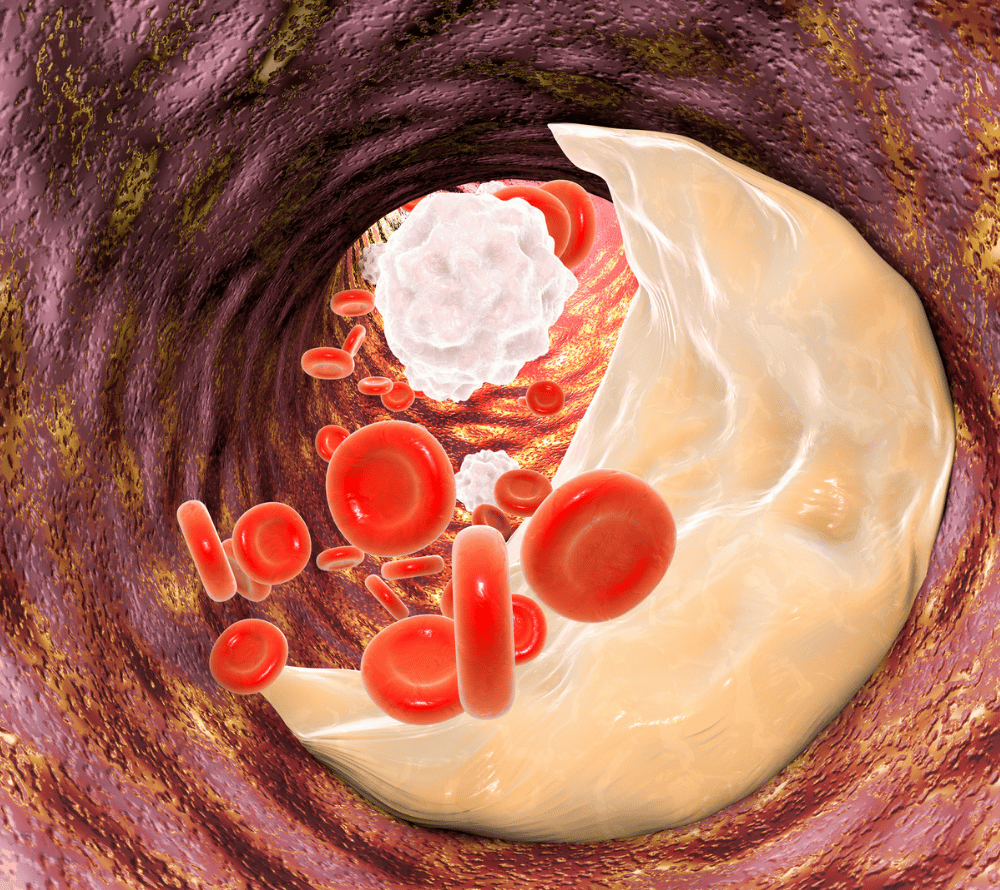
Image from Cleveland Clinic
How is it passed down in families?
FH is usually inherited in a “dominant” pattern. In simple terms:
- If one of your parents has FH, you have about a 50% (1 in 2) chance of having it too. Your brothers, sisters, and children have the same 1 in 2 chance.
- This is why it’s so important for close family members to get their cholesterol checked and monitored.
Are there any warning signs?
Most people have no outward signs. But sometimes cholesterol collects in visible places, such as:
- Firm bumps or lumps over tendons (like the back of the ankle or knuckles)
- Yellowish patches around the eyelids
- A gray or white ring around the colored part of the eye at a young age
- A family history of heart attacks or strokes at an early age (for example, in a parent, brother, or sister before age 55–60)
How Can We Test For This?
The FH Foundation recommends testing for variants in the 4 cholesterol genes most commonly associated with FH: LDL-R, Apo Lipoprotein B (APOB), PCSK9, and Lipoprotein A (LpA ).
Loss-of-function variants of LDLR are the most common (79% to 88% of FH cases), followed by loss-of-function variants of APOB (5% to 13%) and gain-of-function variants of PCSK9 (<1%).
In addition to helping establish a definitive FH diagnosis, positive genetic test results may also facilitate ASCVD risk stratification, guide therapeutic decisions (eg, more intensive lipid lowering), and help increase adherence to therapy by increasing patient awareness of risk.
Elevated Lp(a) levels trigger the development of fatty buildup, which eventually leads to the narrowing of your arterial walls. It makes your blood clot more easily, which can suddenly block blood vessels.
Another useful screening test is the Coronary Calcium Score. This is a fast, non-invasive CT scan that measures hardened calcium plaque in the arteries supplying your heart that causes coronary artery disease (CAD). It helps estimate your risk of heart disease combined with cholesterol markers. It does NOT detect non-calcified plaques, which would lead to a higher overall score.
We calculate the score and put it into 4 Groups:
- Score of 0: No calcium found. This indicates a low risk of a heart attack over the next few years.
- Score of 1–100: Mild amount of plaque. Indicates early or minimal coronary artery disease expected for age.
- Score of 101–300 (or up to 400): Moderate amount of plaque. Associated with a higher risk of heart disease or heart attack in the next 3 to 5 years. We recommend a referral to a cardiologist in this range.
- Score above 400: Extensive plaque and high risk of significant arterial narrowing or a future cardiac event. We recommend an urgent referral to a cardiologist to get a stress test and other studies.
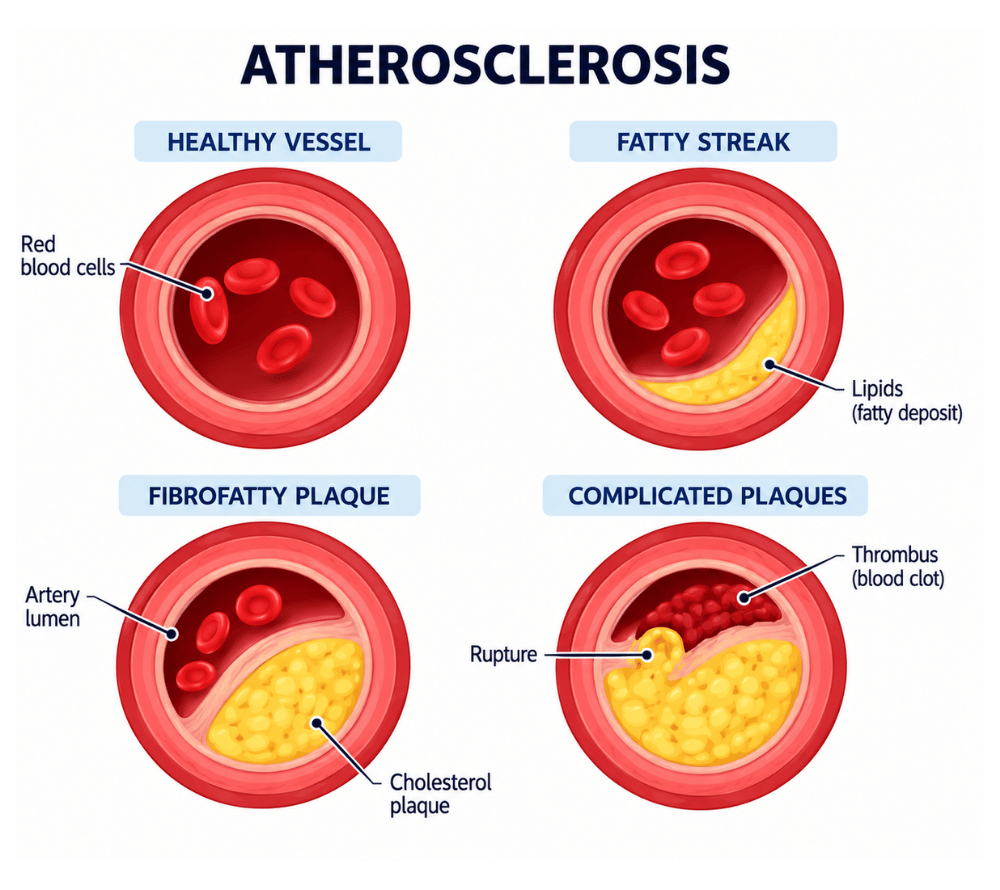
Why does it matter?
High cholesterol usually causes no symptoms — you can’t feel it. But over many years, extra LDL cholesterol builds up in the walls of your arteries and can lead to heart attacks and strokes at an unusually young age if it isn’t treated.
The good news: FH is very treatable. Starting treatment early — often with medicines called statins, along with healthy habits — can lower your risk back toward normal.
What are my Treatment Options?
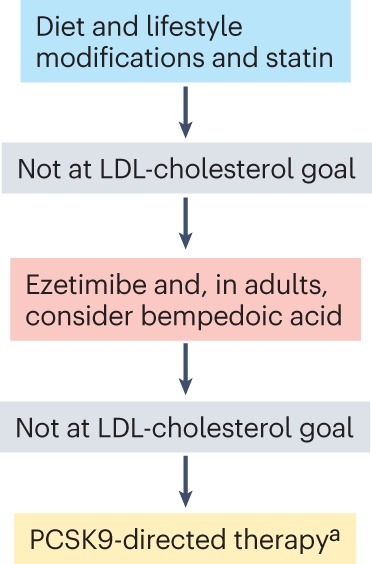
The American College of Cardiology recommends maximally tolerated statin therapy as the foundation of treatment for people with genetically or clinically confirmed familial hypercholesterolemia (FH).
High-intensity statins provide greater atherosclerotic cardiovascular disease (ASCVD) risk reduction than moderate-intensity statins.
Most fears about statins reflect misconceptions: the drugs are far safer than the public believes. The cardiovascular benefit significantly outweighs the small, mostly reversible risks.
Over 30 years of trial data confirm this, yet misinformation (especially on social media) has driven real harm, potentially causing thousands of avoidable cardiovascular events.
Chart on Statin Benefits and Risks

Because genetic hypercholesterolemia carries high lifetime risk, treatment goals are stricter than for the general population.
- If you do not yet have cardiovascular disease but have confirmed FH plus additional risk factors or an elevated coronary calcium score, the goal is a more aggressive LDL <70 mg/dL.
- If you already have established cardiovascular disease, the goal is LDL <55 mg/dL.
Other non-statins like Ezetimibe, a PCSK9 monoclonal antibody ( Repatha/Praluent), and/or bempedoic acid can be added to statin therapy to reach that goal.
What should you do?
- Get your cholesterol checked with a simple blood test in the office.
- Tell your doctor about your family history of high cholesterol or early heart disease.
- Ask whether your relatives should be tested — including your children and first degree relatives.
- Ask if genetic testing is right for you, which can confirm the diagnosis in some cases.
- Take treatment as prescribed if your doctor recommends it — this is the most powerful way to protect your heart.
The bottom line
High cholesterol can run in families, and your high cholesterol may not be all your fault.
FH is a common cause of high cholesterol; it is silent and serious — but it is also very treatable, especially when found early. Do not let this be the silent killer of your life and health. Know your number to better understand your risks.
This is one of our specialties at North Chattahoochee. Discuss what tests are needed with one of our experienced providers so you can get the right treatment to prevent cardiovascular problems down the road.
Concerned About High Cholesterol?
Talk With a Primary Care Doctor in Johns Creek
If your cholesterol remains high despite diet and exercise, or you have a family history of high cholesterol, heart attack, or stroke, talk with our team at North Chattahoochee Family Physicians. Our primary care providers in Johns Creek can review your cholesterol levels, family history, cardiovascular risk factors, and determine what additional testing may be appropriate.
Citations
Lancet. 2026. Cholesterol Treatment Trialists’ (CTT) Collaboration. Electronic address: ctt@ndph.ox.ac.uk, Cholesterol Treatment Trialists’ (CTT) Collaboration.RecentSR
Arteriosclerosis, Thrombosis, and Vascular Biology. 2019. Newman CB, Preiss D, Tobert JA, et al.Guideline
3.Recent Advances in Research and Care of Familial Hypercholesterolaemia.
The Lancet. Diabetes & Endocrinology. 2025. Santos RD, Gidding SS, Bourbon M, et al.RecentReview
4.Familial Hypercholesterolemia.
The Journal of the American Medical Association. 2026. Stein JH, Tattersall MC.Recent
Journal of Clinical Lipidology. 2026. Ahmad Z, Agarwala A, Cuchel M, et al.